Outer shell
6 cups basmati rice
2 pounds 93% lean ground beef
2 Tbsp. water
2 teaspoons salt, or more to taste
1/8 - 1/4 teaspoon black pepper
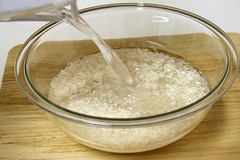
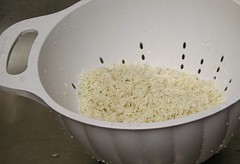
Soak rice overnight, then drain. In a food processor, grind rice until it is the consistency of coarse sand. Continue to blend while adding ground beef, 1/2 cup at a time, until it is well mixed and starts to stick together. Add salt and pepper, then adjust to taste.
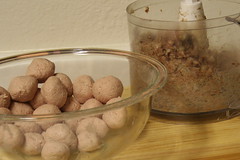
Divide and shape the shell into into 60 or more balls of equal size.
Filling
1 pound 80% lean ground beef
1 medium onion, finely chopped (volume by cup)
1 teaspoon 7-spice powder*
1/2 -1 teaspoon salt
Assembly
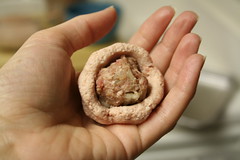
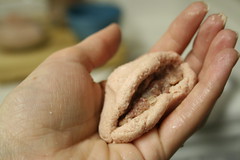
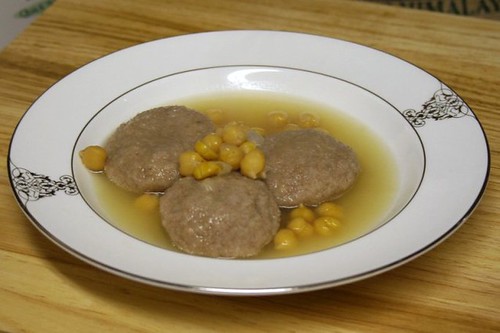
Hollow out the balls of shell, creating pockets for the filling. Tuck a teaspoon of filling into each shell and close smoothly. Drop into boiling sauce of your choice and cook until kubba rise to the top, then at least 5 minutes more. Avoid over-boiling kubba so they don't break apart in the sauce.


Enjoy!
*Purchase in Middle Eastern markets. Can be substituted for a mixture of cumin, allspice and cloves.

 Soak rice overnight to achieve the proper consistency.
 Drain the rice.
 Transfer soaked rice to a food processor. Note to Self: I want a new food processor for Christmas next year. Essence of electrical burning is not my idea of a pleasin' kitchen aroma.
 Add salt and pepper. It's important to do this often as you add more ingredients, to ensure a proper balance between rice, meat, salt, and spice.
 Run the food processor until the rice becomes somewhat granular.
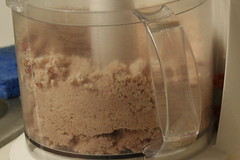
 While still running the food processor, start adding beef, a handful at a time. For the shell, we have used lean ground beef. Why lean? It's preferable to more fatty varieties because it helps ensure that the shell holds its shape while it's being boiled. Fat acts more as a tenderizer/lubricant than a glue here. You need a little, but too much in the outer shell raises the chances of the kibbe disintegrating while they boil. After all this work, you're going to be sad (and maybe mad) if things fall apart. Since food should make you happy, be picky about your beef.
  Handful by handful, keep adding ground beef, keeping an eye on the coloring. You want a nice pink (not red) mix.
 The goal is to have a thick, sticky but workable mixture, so add a little water if it seems like it's dry and grainy vs. sticky.
 You're done when the color is like this. I've given quantity guidelines in the ingredients here, but next time I make kubba I'll carefully measure so I can make a more exact recommendation on the proportion of rice to meat, for those of us who like things to be precise and measured.
 For the filling, use 80-85% lean beef. A fattier grade of ground beef is needed for the filling because it should have a marked contrast in color, flavor, and texture from the shell. In the words of my father-in-law, the filling should be "fluffy." In a beefy sort of way.
  This shows the contrast in color between the shell and the filling.
  Have a bowl of ice water nearby to wet your hands if they get too sticky to work with, which they invariably do.
  With your thumb or finger, poke a hole in the ball and then pinch the sides until you've transformed your ball into a bowl (remember ceramics class?).
 Now pinch a glob of filling and deposit it into your nice little bowl. The blob of meat should be almost (but not quite) as big as the original shell glob, ensuring that there will be enough filling to flavor the kubba without making it impossible to close the shell around the filling.
 Now fold the sides of the shell over to encapsulate the filling. This may take some practice, but believe me, you'll get the hang of it if you stick with it (get it? stick? 'cause it's...never mind.)
 Get all those edges folded over the top and smooth them down a little.
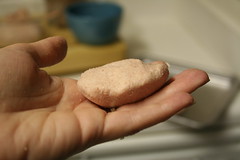
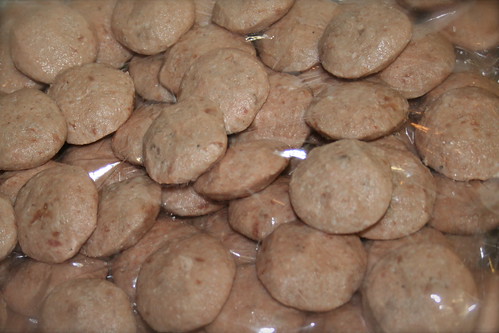
 Next, between your hands, gently press the little ball until it's somewhat on the flat side...think flying saucer.
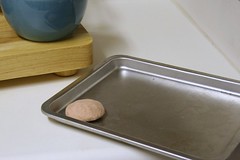
 Now you're done! And isn't it cute. Now just repeat this about a hundred times. HA! No really...do it. And think of what a domestic diva you're becoming. And about how happy that man of yours is gonna be when he sinks his teeth into one of these. And about how you only have to do this a couple of times a year if you play your cards right, because these babies freeze like a charm. You don't even have to defrost them before plopping them into the sauce when cooking time rolls around.
 Layer the kibbe on plastic wrap (I haven't tried parchment paper, but I wonder if that would work, considering these are going in the freezer?), being sure they aren't touching. Since they're kinda flat anyhow, don't worry about laying them on top of each other. No harm done if they get a little flatter.
 When all the outer shell is gone, you're done! Finito! Hallas! Now if you have a sauce prepared, plop however many kubba you want into the pot and boil until they float to the top. Cooking time varies depending on the size of your kubba, but when they rise to the top, try one...it's probably done. Meanwhile, put the rest into the freezer. Once they've hardened, transfer them into a dated ziplock bag and pull them out as needed.